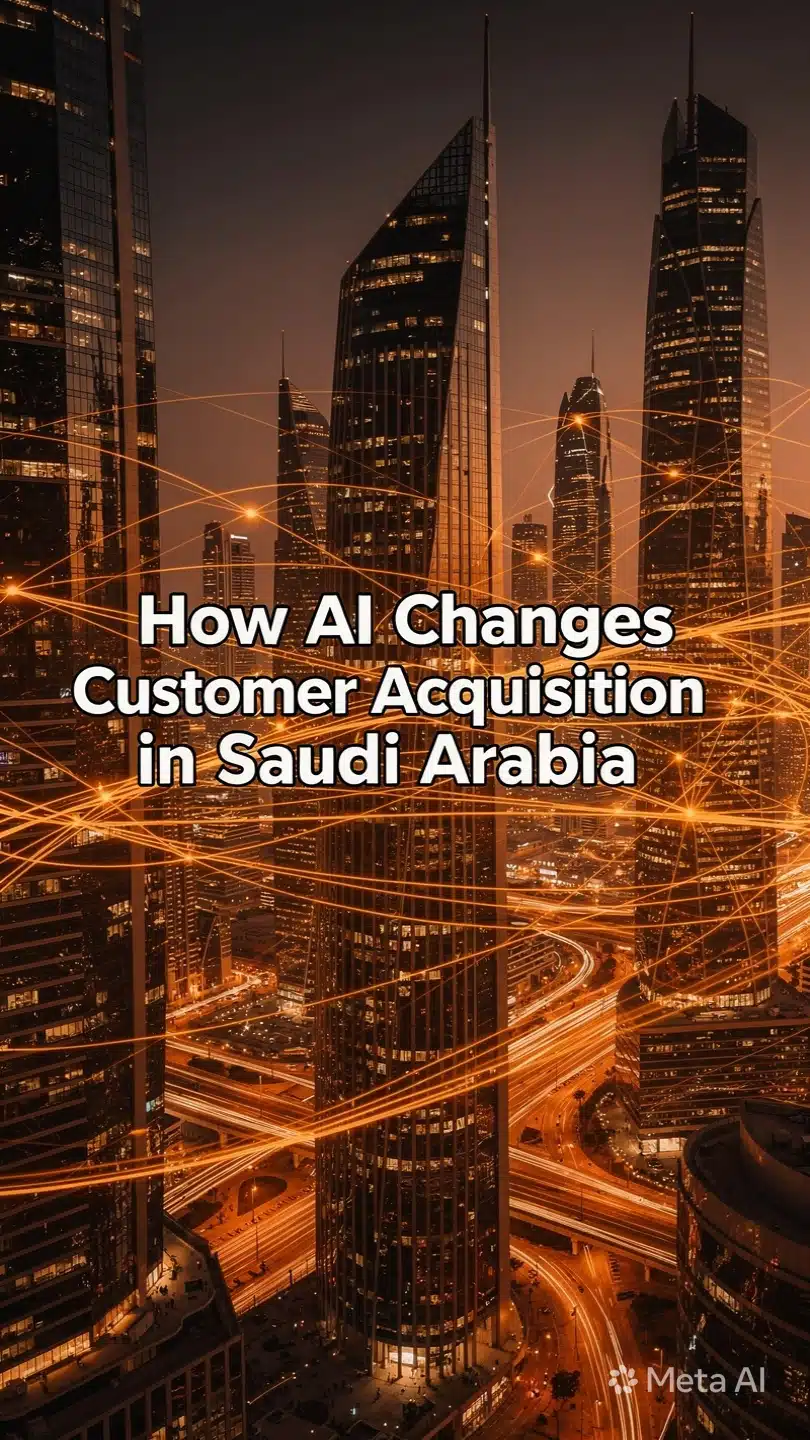
Saudi Arabia stands at the cusp of a profound transformation, driven by ambitious economic diversification plans under Vision 2030. This national blueprint emphasizes digital advancement, fostering innovation, and building a knowledge-based economy. Within this rapidly evolving landscape, businesses are recalibrating their strategies, particularly in the critical domain of customer acquisition. The traditional methods, while still foundational, are being dramatically reshaped by the pervasive influence of Artificial Intelligence. AI is not merely an optimization tool here; it is becoming an indispensable engine powering growth, enabling unparalleled personalization, and creating efficiencies that were once unimaginable in the pursuit of new customers across the Kingdom.
The unique characteristics of the Saudi market – a young, digitally native population with high disposable income, coupled with distinct cultural nuances – present both immense opportunities and complex challenges for marketers. Against this backdrop, AI offers a sophisticated framework to understand, engage, and convert prospective customers with unprecedented precision. From predicting consumer behavior to automating hyper-personalized interactions, AI is fundamentally altering how businesses identify, attract, and onboard their next customer. This deep dive explores the multifaceted ways AI is redefining customer acquisition in Saudi Arabia, examining its practical applications, the market-specific considerations, and the strategic imperatives for businesses operating within this dynamic economy.
The Saudi Context: A Digital Frontier
Saudi Arabia’s digital landscape is characterized by its scale and pace. With one of the highest internet and social media penetration rates globally, and a population where over 60% are under 30 years old, the Kingdom is inherently digital-first. This demographic reality, combined with ambitious government initiatives like NEOM and The Red Sea Project, creates a fertile ground for technological adoption and innovation in business. Vision 2030’s commitment to digital transformation, smart cities, and a thriving private sector directly fuels the demand for advanced marketing technologies, with AI at the forefront.
Consumers in Saudi Arabia are sophisticated digital users, accustomed to seamless online experiences, mobile commerce, and a high level of personalization from global brands. They engage heavily with content on platforms like X (formerly Twitter), TikTok, Snapchat, and Instagram-content-strategy-social-media/”>Instagram, making social media a potent channel for customer acquisition. However, cultural context remains paramount. Successful strategies must respect local traditions, language nuances, and societal values. This necessitates a more intelligent approach than simply replicating Western marketing models, demanding deep market understanding combined with technological agility. The sheer volume of digital interactions generates vast datasets, providing the raw material for AI systems to learn, adapt, and refine customer acquisition strategies specifically for the Saudi consumer.
AI’s Foundational Impact on Customer Acquisition
At its core, AI revolutionizes customer acquisition by enhancing the ability to understand, predict, and interact with potential customers more effectively than ever before. This impact ripples through every stage of the acquisition funnel, from initial awareness to final conversion.
Personalization at Scale: Traditional marketing struggled to offer truly individualized experiences beyond basic demographic segmentation. AI changes this by analyzing granular data points – online behavior, purchase history, content consumption, even sentiment – to create highly accurate individual profiles. It then uses these profiles to tailor messages, offers, and entire customer journeys in real-time, making each interaction feel unique and relevant. For the discerning Saudi consumer, this level of bespoke engagement can be a powerful differentiator.
Predictive Analytics for Prospect Identification: One of AI’s most impactful contributions is its predictive power. By analyzing historical data, AI algorithms can identify patterns that indicate a higher propensity for conversion. This allows businesses to move beyond reactive marketing to proactively target individuals most likely to become customers. In Saudi Arabia, where market competition is intensifying, identifying high-value prospects efficiently can significantly reduce acquisition costs and improve ROI. This extends to predicting customer churn for existing clients, allowing for retention efforts that, in turn, free up acquisition resources.
Automated Content Creation and Optimization: Generative AI models are now capable of producing localized marketing copy, social media posts, ad headlines, and even visual assets at an unprecedented pace. This enables marketers to rapidly A/B test a multitude of variations, identifying what resonates most effectively with different segments of the Saudi audience. Beyond creation, AI continuously optimizes content delivery, ensuring the right message reaches the right person on the right platform at the optimal time, considering cultural sensitivity and language preferences (Arabic dialects, English).
Enhanced Pre-Acquisition Customer Service: AI-powered chatbots and virtual assistants are increasingly deployed at the top of the funnel to engage prospective customers. These tools can answer common questions, provide product information, qualify leads, and guide users towards conversion paths, all without human intervention. For businesses operating in Saudi Arabia, this means 24/7 support in multiple languages, improving initial customer experience and ensuring that potential leads are nurtured effectively before they even interact with a human sales representative.
Key AI Applications Reshaping the Acquisition Funnel in KSA
The practical implementation of AI in customer acquisition in Saudi Arabia spans various critical areas, each offering distinct advantages.
Audience Targeting and Micro-Segmentation: AI takes audience targeting to a new level. Beyond traditional demographics, AI analyzes psychographic data, behavioral patterns, online interests, and even real-time intent signals to create incredibly precise customer segments. This micro-segmentation allows marketers to craft campaigns that speak directly to the nuanced needs and aspirations of specific groups within the Saudi population, whether it’s young professionals in Riyadh interested in fintech, families in Jeddah seeking luxury travel experiences, or consumers in the Eastern Province looking for sustainable products. AI-driven lookalike modeling also helps expand reach by identifying new prospects who share similar characteristics with existing high-value customers.
Real-time Campaign Optimization: The days of setting a campaign and waiting for results are fading. AI enables continuous, real-time optimization of advertising campaigns. Algorithms monitor performance metrics across various channels – search engines, social media platforms, programmatic display networks – and dynamically adjust bids, budget allocation, and creative elements to maximize ROI. This is particularly crucial in a fast-paced market like Saudi Arabia, where consumer trends and competitive landscapes can shift rapidly. AI ensures that marketing spend is always directed towards the most effective channels and messages, responding instantly to changing market conditions.
Lead Generation and Qualification: For B2B and high-value B2C segments, AI dramatically improves lead generation and qualification processes. Predictive analytics can identify potential business clients based on company firmographics, industry trends, online activity, and even news mentions. AI-powered lead scoring models assign a value to each lead based on their likelihood to convert, allowing sales teams to prioritize their efforts on the most promising prospects. This reduces wasted time and resources, making the acquisition process significantly more efficient.
Content Localization and Hyper-Personalization: Generating marketing content that resonates deeply with Saudi consumers requires a sophisticated understanding of cultural context, linguistic nuances, and local preferences. Generative AI tools are becoming adept at producing content that aligns with these specific requirements, from adapting tone and imagery to translating idioms accurately. Furthermore, AI can personalize content at scale, dynamically altering ad copy, website experiences, and email communications based on an individual’s journey and demonstrated interests, ensuring relevance in a culturally diverse market.
Channel Optimization and Attribution: AI helps businesses understand which channels are most effective for acquiring different customer segments in Saudi Arabia. By analyzing multi-touch attribution data, AI can accurately credit various marketing touchpoints that contribute to a conversion, moving beyond last-click models. This intelligence allows marketers to optimize their media mix, allocating budgets to the channels that deliver the best results, whether it’s a specific social media platform, a targeted search campaign, or a partnership with a local influencer. For instance, an agency like Stork Advertising, with its proven track record in sophisticated AI strategy and execution across diverse markets from Europe to the MENA region, understands how to leverage these insights to build effective multi-channel acquisition funnels.
Navigating the Nuances: Challenges and Opportunities in the Saudi Market
While the potential of AI in customer acquisition for Saudi Arabia is immense, its successful implementation requires careful consideration of specific market challenges and a strategic approach to capitalize on opportunities.
Data Privacy and Governance: As AI systems rely heavily on data, ensuring compliance with evolving data privacy regulations (both local and international) is paramount. Businesses must establish robust data governance frameworks to collect, store, and process customer data ethically and transparently. Building trust with Saudi consumers requires clear communication about data usage and a commitment to protecting personal information, balancing innovation with stringent ethical guidelines.
Talent Gap and Skill Development: The rapid adoption of AI creates a significant demand for skilled professionals who can develop, implement, and manage AI solutions. There is a recognized talent gap in areas like data science, machine learning engineering, and AI ethics within the Kingdom. Businesses must invest in upskilling their existing marketing and IT teams, fostering AI literacy, and collaborating with educational institutions to cultivate the next generation of AI talent. This includes understanding the strategic implications of AI beyond just the technical deployment. Ahmed Adham, Founder of Stork Advertising and a Digital Marketing expert with a Master’s degree in Business Administration, often emphasizes the need for marketers to ground their AI strategies in fundamental principles, referencing his academic exposure to thought leaders like Philip Kotler and Seth Godin, underscoring that technology serves strategy, not the other way around.
Cultural Sensitivity in AI Output: AI-generated content and interactions must be rigorously reviewed for cultural appropriateness. An AI model trained predominantly on Western data might inadvertently produce content that is irrelevant or even offensive in the Saudi context. Implementing strict guardrails, extensive local data training, and human oversight are crucial to ensure that AI maintains respect for local customs, religious values, and social norms. The nuances of Arabic language dialects, for example, require sophisticated AI models that go beyond standard translation.
Infrastructure Requirements: Advanced AI models require significant computational power and robust cloud infrastructure. While Saudi Arabia is making strides in digital infrastructure development, businesses need to ensure they have the necessary technological backbone to support complex AI deployments. This often involves partnerships with cloud providers and investments in scalable data architectures.
Opportunities abound for businesses that address these challenges proactively. The first-mover advantage for deploying sophisticated, culturally intelligent AI solutions can be substantial. For example, localizing large language models (LLMs) to better understand and generate content in specific Arabic dialects and Saudi cultural contexts represents a massive opportunity. Furthermore, AI can help businesses identify niche markets and underserved segments within the Kingdom, enabling tailored product development and marketing efforts. The push towards smart cities and digital government services also creates a fertile ecosystem for AI integration, opening new avenues for customer engagement and acquisition.
The Future Landscape: Generative AI and Beyond
The trajectory of AI in customer acquisition points towards even more integrated and predictive capabilities, with Generative AI playing a starring role. We are moving beyond simply optimizing existing processes to creating entirely new paradigms for engaging prospective customers.
Hyper-Personalized, Dynamic Customer Journeys: Future AI systems will not just personalize static content; they will dynamically construct entire customer journeys in real-time, adapting every touchpoint based on live interactions, sentiment analysis, and predictive models. Imagine an AI agent guiding a potential customer through a personalized product discovery process on a website, generating bespoke answers to questions, and even simulating product usage scenarios tailored to their unique needs and preferences.
Proactive Engagement and Need Anticipation: AI will increasingly move towards anticipating customer needs before they are even explicitly stated. By analyzing vast datasets of behavioral, social, and environmental signals, AI could predict that a customer might soon be in the market for a particular product or service and initiate a proactive, relevant outreach. This shifts customer acquisition from a reactive response to expressed interest to a proactive anticipation of future demand, revolutionizing lead generation.
Synthetic Data Generation for Niche Markets: For businesses targeting very specific or nascent segments in Saudi Arabia where real-world data might be scarce, generative AI could create synthetic data. This artificial data, mimicking the characteristics of real customers, can be used to train AI models and test acquisition strategies without compromising privacy or waiting for sufficient real data to accumulate. This is particularly valuable for innovative products or services entering new markets.
Ethical AI in Marketing: As AI becomes more sophisticated, the ethical considerations around its use in customer acquisition will intensify. Ensuring transparency in how AI makes decisions, preventing algorithmic bias, and upholding principles of fairness and accountability will be critical. Businesses in Saudi Arabia will need to prioritize ethical AI frameworks, building trust with consumers through responsible data handling and unbiased marketing practices. Partnering with agencies that prioritize ethical deployment and have a deep understanding of local compliance frameworks will be crucial for navigating this evolving landscape. Stork Advertising, with its Dubai office serving the UAE, Saudi Arabia, and the wider GCC region, possesses the nuanced understanding needed to implement sophisticated AI strategies responsibly within this culturally rich and rapidly developing market.
Strategic Imperatives for Businesses in Saudi Arabia
For businesses aiming to thrive in the AI-driven customer acquisition landscape of Saudi Arabia, several strategic imperatives emerge:
First, invest in robust data infrastructure and governance. AI is only as good as the data it consumes. Establishing secure, scalable data lakes and implementing clear data governance policies are foundational. Second, prioritize ethical AI deployment. This builds trust and ensures compliance. Businesses must develop internal guidelines and ensure regular audits of their AI systems for bias and fairness. Third, foster AI literacy and upskilling within marketing teams. The human element remains critical; marketers need to understand how to leverage AI tools, interpret their outputs, and strategically guide their deployment. Fourth, embrace an agile and experimental approach. The AI landscape is evolving rapidly, requiring businesses to continuously test, learn, and adapt their strategies. Finally, seek partnerships with experienced Digital Marketing agencies. Navigating the complexities of AI implementation, market nuances, and strategic execution requires specialized expertise. Collaborating with agencies that have a proven track record in the region can accelerate AI adoption and maximize its impact on customer acquisition outcomes. The implementation of sophisticated customer acquisition strategies leveraging AI in the KSA market demands a blend of global best practices and localized execution, an area where agencies with regional presence and strategic insight can offer significant value.
Conclusion
AI is unequivocally reshaping the future of customer acquisition in Saudi Arabia. Driven by Vision 2030’s digital ambitions and a young, tech-savvy population, the Kingdom presents a unique and fertile ground for AI innovation in marketing. From hyper-personalization and predictive analytics to automated content creation and real-time campaign optimization, AI empowers businesses to connect with prospective customers with unprecedented precision and efficiency.
While challenges related to data privacy, talent development, and cultural sensitivity persist, the opportunities for those who strategically embrace AI are immense. The future will see increasingly dynamic and proactive acquisition journeys, where AI anticipates needs and creates highly relevant experiences. Success in this evolving landscape hinges on a commitment to robust data infrastructure, ethical AI practices, continuous learning, and a profound understanding of the unique Saudi consumer. Businesses that skillfully integrate AI into their acquisition strategies, balancing technological prowess with cultural intelligence, are poised to capture significant market share and drive sustainable growth in this vibrant economy.
Ready to Scale Your Brand?
Partner with Stork Advertising, the leading digital marketing agency specialized in the Middle East and European markets. Whether you need high-end commercials, data-driven performance marketing, or AI-integrated strategies, our experts are ready to deliver results.
Frequently Asked Questions (FAQ)
How does AI impact this specific marketing area?
AI automates data analysis and content personalization, allowing for more efficient and targeted campaigns.
Will AI replace human marketers in this field?
No, AI acts as a tool that enhances human creativity and strategic decision-making rather than replacing it.
What is unique about the Saudi digital market?
The Saudi market is highly mobile-first with a strong preference for video content and influencer-driven recommendations.