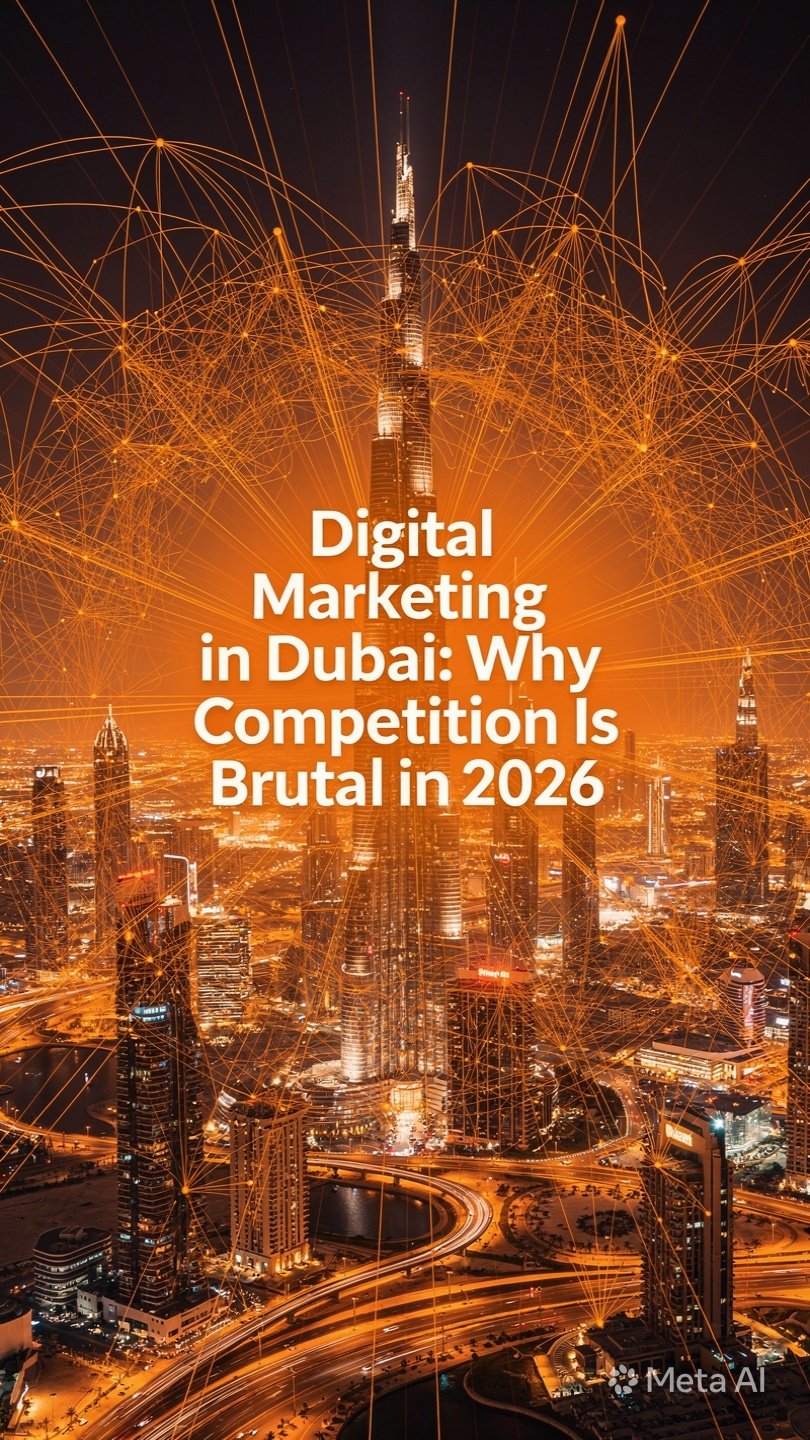
Dubai, a city synonymous with ambition and rapid evolution, continues to redefine its place on the global stage as we navigate 2026. From its iconic skyline to its burgeoning tech ecosystem, the emirate is a magnet for innovation, capital, and talent. This relentless drive for growth, however, casts a long shadow over its Digital Marketing landscape, transforming it into one of the most fiercely contested battlegrounds for agencies, brands, and professionals worldwide. What was once a land of opportunity with relatively open spaces has matured into a market where only the most agile, insightful, and technologically advanced players can hope to thrive. The competition here isn’t just tough; it’s brutal, driven by a unique confluence of economic dynamism, technological adoption, and a highly sophisticated consumer base.
Understanding this intensity requires looking beyond superficial metrics and delving into the deep currents shaping Dubai’s digital future. The factors at play range from hyper-connectivity and diverse demographics to an insatiable appetite for cutting-edge technology and an ever-evolving regulatory framework. For any entity seeking to capture market share or even simply maintain relevance, grasping these foundational elements is not merely an advantage; it is an existential necessity.
Dubai’s Digital Ascent: A 2026 Perspective
The foundation of Dubai’s competitive digital marketing environment lies in its status as a leading global hub. By 2026, the city has cemented its reputation as a nexus for trade, tourism, finance, and increasingly, technology. Its strategic geographical position acts as a bridge between East and West, attracting a kaleidoscope of businesses and consumers.
A pivotal element is Dubai’s advanced digital infrastructure. The emirate boasts near-universal internet penetration, widespread 5G connectivity, and an aggressive rollout of smart city initiatives. This creates an always-on, digitally literate population accustomed to seamless online interactions. Coupled with this is a demographic profile unlike almost anywhere else. Dubai is home to a highly diverse, predominantly expatriate population with significant disposable income and a strong propensity for early adoption of new technologies. This melting pot of cultures and purchasing power presents both immense opportunity and complex challenges for marketers attempting to tailor messaging effectively.
The UAE government’s vision, particularly Dubai’s, plays an instrumental role in shaping this digital landscape. Initiatives like the Dubai Future Foundation and the push for a knowledge-based economy foster an environment ripe for technological experimentation and digital transformation across all sectors. Businesses are not just encouraged but often mandated to embrace digital solutions, from e-government services to cashless transactions and AI integration. This top-down push for digitalization accelerates market maturity, pushing the boundaries of what is expected from digital marketing efforts.
The Hyper-Competitive Landscape: Core Drivers
The combined effect of Dubai’s robust digital infrastructure, diverse economy, and government foresight has created a hyper-competitive arena where traditional marketing approaches quickly become obsolete. Several core drivers underpin this brutal competition.
Market Saturation and the Quest for Differentiation
The allure of Dubai has attracted a vast number of digital marketing agencies, consultants, and freelancers. What once might have been perceived as a nascent market has become saturated with providers, from boutique local outfits to large international networks. While the barriers to *entering* the market are relatively low, the barriers to *standing out* and securing significant market share are exceptionally high. Clients, from multinational corporations to local SMEs, are bombarded with proposals. This forces agencies to move beyond generic service offerings and develop highly specialized, results-driven propositions that clearly articulate their unique value. Differentiation is no longer a luxury; it’s the price of admission.
The Talent Scramble for Specialized Skills
As digital marketing strategies grow in complexity, the demand for specialized talent skyrockets. In Dubai, this translates into an intense scramble for professionals proficient in areas like advanced data analytics, AI-driven content generation, programmatic advertising, performance marketing, and ethical data management. The available talent pool, while growing, often struggles to keep pace with the rapidly evolving skill requirements. This drives up salaries, fosters a culture of poaching, and places immense pressure on agencies to invest heavily in continuous upskilling and talent retention. Finding and nurturing experts capable of navigating the nuances of multi-channel, multi-cultural campaigns is a constant uphill battle.
Advanced Technological Adoption and the Innovation Treadmill
Dubai’s businesses and consumers are early and enthusiastic adopters of cutting-edge technology. This means digital marketers cannot rest on traditional methods. AI, machine learning, virtual reality, augmented reality, and Web3 concepts are not futuristic ideas but present-day tools being integrated into consumer experiences. Agencies are therefore under immense pressure to not only understand these technologies but also to master their application in creative and effective marketing campaigns. This continuous innovation treadmill demands significant R&D investment, constant learning, and a willingness to iterate rapidly. Falling behind on technological capability means immediate competitive disadvantage.
A Sophisticated and Demanding Consumer Base
Dubai’s consumers are among the most digitally sophisticated globally. They are accustomed to seamless online experiences, hyper-personalized communications, and instant gratification. They can readily discern authentic, valuable content from generic or poorly targeted messaging. With access to global brands and services, their expectations are continually reset by best-in-class experiences from around the world. Marketers operating in this environment must deliver exceptional value, intuitive user journeys, and highly relevant content that genuinely resonates, often across multiple cultural backgrounds simultaneously. Anything less risks being ignored in a crowded digital sphere.
Evolving Regulatory Frameworks and Data Privacy
The global shift towards greater data privacy and consumer protection has reached Dubai and the wider GCC region. By 2026, regulatory frameworks concerning data collection, usage, and consent are more defined, often mirroring global standards like GDPR in their intent. This adds another layer of complexity for digital marketers. Agencies must ensure strict compliance, not only to avoid penalties but also to build and maintain trust with consumers. This necessitates robust data governance strategies, transparent communication about data practices, and an ethical approach to personalization. Navigating these evolving legal landscapes effectively requires specialized knowledge and diligence, making it a critical competitive factor.
Generative AI and the New Digital Frontier
Perhaps the most transformative force shaping digital marketing in Dubai for 2026 is the ubiquitous integration of Generative AI. This technology has fundamentally altered the creation, distribution, and consumption of digital content, intensifying competition across the board.
Content Proliferation and the Authenticity Imperative
Generative AI’s ability to produce high volumes of text, images, and even video at an unprecedented pace has led to an explosion of digital content. While this can democratize content creation, it also means that the digital space is flooded. The challenge for marketers shifts from merely *creating* content to creating *distinguishable, valuable, and authentic* content that cuts through the noise. AI-generated content that lacks a human touch, genuine insight, or cultural nuance quickly falls flat with Dubai’s discerning audience. This pushes agencies to leverage AI for efficiency in routine tasks, freeing up human talent for strategic thinking, creative oversight, and injecting genuine brand voice and emotional intelligence.
Hyper-Personalization at Unprecedented Scale
Generative AI empowers marketers to craft hyper-personalized experiences that were previously unimaginable. From dynamically generated ad copy tailored to individual user behavior to personalized email campaigns and chatbot interactions, AI can create bespoke journeys for millions. This raises consumer expectations exponentially. Brands that fail to deliver tailored experiences risk appearing out of touch. For digital marketers in Dubai, this means investing in AI tools that can process vast datasets, understand complex user segments, and produce highly relevant content variants. The competitive edge goes to those who can master AI-driven personalization while maintaining an ethical and non-intrusive approach.
The Evolution of Search and Discovery
The landscape of search has profoundly changed with Generative AI. Traditional keyword-based SEO-in-digital-marketing-how-does-it-work-the-seo-quick-beginners-guide/”>SEO is now augmented by “Generative Engine Optimization” (GEO), where AI models answer queries directly, summarize content, and even generate new information based on user intent. This means marketers must optimize content not just for keywords, but for clarity, entity recognition, and the ability to be accurately summarized and referenced by AI systems. The rise of zero-click searches, where users get answers without ever visiting a website, means that appearing as a trusted source in AI summaries becomes a critical objective. Voice search, visual search, and conversational AI interfaces are increasingly dominant, demanding content formatted for diverse query types and consumption patterns.
Creative Automation and Strategic Foresight
Generative AI isn’t just a tool for efficiency; it’s a catalyst for creative exploration. Agencies can use AI to rapidly prototype ideas, generate multiple creative variations, and analyze performance data to refine campaigns in real-time. This accelerates the creative cycle, but it also means that the strategic insight and human oversight become even more paramount. The ability to prompt AI effectively, to curate its outputs, and to infuse campaigns with strategic depth that AI alone cannot provide, is where human expertise truly shines. Agencies that can marry cutting-edge AI capabilities with profound strategic understanding will carve out a significant competitive advantage. For instance, Stork Advertising, with its blend of strategic insight across Europe and the MENA region, has demonstrated how advanced analytics, supported by generative AI, can be effectively applied to complex cross-cultural campaign development, leveraging their London headquarters’ global perspective to enhance localized strategies, particularly in the UAE market.
Data as the Ultimate Differentiator
In an environment saturated with content and fueled by AI, data has emerged as the most valuable commodity and the ultimate differentiator. The ability to collect, analyze, and ethically leverage data underpins all successful digital marketing strategies in 2026 Dubai.
The First-Party Data Imperative
The deprecation of third-party cookies and increased privacy regulations have made first-party data indispensable. Marketers must now focus on building direct relationships with their audiences to collect data with explicit consent. This involves creating compelling loyalty programs, personalized website experiences, and direct communication channels. For agencies, this means guiding clients through the complex process of first-party data strategy development, ensuring compliance, and building robust CRM systems. The competitive edge lies with those who can help brands not just collect data, but effectively utilize it to deepen customer relationships and inform future campaigns.
Predictive Analytics and Future-Proofing
Beyond understanding past behavior, the most sophisticated digital marketing operations in Dubai are leveraging predictive analytics. This involves using machine learning models to forecast future trends, anticipate consumer needs, and predict campaign performance. Such foresight allows for proactive adjustments, optimizing budgets, and seizing emerging opportunities before competitors. This capability requires significant investment in data science expertise and advanced analytical tools, placing immense pressure on agencies to offer these high-value services.
Measurement Complexity and Attribution Challenges
In a multi-channel, AI-driven marketing ecosystem, attributing campaign success accurately is more complex than ever. Customers interact with brands across numerous touchpoints – social media, search engines, websites, apps, and increasingly, AI interfaces. Marketers must implement advanced attribution models that can account for these complex journeys, moving beyond last-click attribution to understand the cumulative impact of various touchpoints. The ability to demonstrate clear ROI through sophisticated measurement frameworks is a crucial factor in winning and retaining clients in this competitive market.
Localization Beyond Language
Dubai’s unique demographic composition means that localization in digital marketing extends far beyond mere language translation. It demands a deep understanding of cultural nuances, consumer behaviors, and platform preferences specific to various segments within the population.
Cultural Nuance and Authenticity
With a vast expatriate population alongside Emirati nationals, effective marketing requires profound cultural sensitivity. What resonates with a Western expatriate might not resonate with an Arab national, an Indian professional, or a Filipino worker. Marketers must navigate religious sensitivities, social norms, and diverse value systems. This necessitates content that is not just translated but *transcreated*, adapting concepts, visuals, and messaging to be culturally appropriate and genuinely authentic for specific target segments. Generic campaigns, regardless of how well-funded, often fail to connect.
Platform Specificity and Media Consumption Patterns
Different demographics in Dubai often gravitate towards distinct digital platforms. While global giants like Facebook, Instagram-content-strategy-social-media/”>Instagram, and TikTok are popular, local or regionally dominant platforms and messaging apps also hold significant sway. Understanding which platforms specific target audiences use, how they interact with content on those platforms, and even preferred payment gateways are critical. A strategy that is optimized for one platform may be ineffective on another, demanding a granular approach to media planning and content distribution.
Building Genuine Community Connections
In a market defined by its diversity, building genuine connections with specific communities fosters trust and loyalty. This involves engaging with local influencers, participating in community discussions, and creating content that reflects the aspirations and values of distinct groups. This move from broad-stroke advertising to community-centric engagement requires significant investment in market research and on-the-ground understanding. This focus on deep cultural embedding and genuine connection is something Ahmed Adham, Founder of Stork Advertising and a digital marketing expert with a Master’s degree in Business Administration, often emphasizes. Drawing on academic exposure to giants like Philip Kotler and Seth Godin, Adham frequently points to the imperative of balancing universal marketing principles with acute local contextual awareness, especially in dynamic markets like Dubai, where understanding the ‘why’ behind consumer behavior is as crucial as the ‘what’.
Strategic Imperatives for Success in 2026
Navigating the brutal competition in Dubai’s 2026 digital marketing landscape demands more than just effort; it requires a strategic overhaul and a commitment to continuous evolution.
Deep Specialization and Niche Expertise
The era of the generalist digital marketing agency is fading in Dubai. Clients now seek partners with deep expertise in specific areas, whether that’s performance marketing for e-commerce, B2B lead generation, metaverse advertising, or ethical AI integration. Agencies that can carve out and dominate a niche, proving unparalleled knowledge and results in that specific domain, will command attention and loyalty. This specialization allows for more targeted talent acquisition, focused R&D, and more effective client solutions.
Continuous Tech Integration and R&D
Staying at the forefront of technological advancements is non-negotiable. Agencies must continuously invest in understanding and integrating new platforms, AI tools, and analytical capabilities. This isn’t a one-off project but an ongoing commitment to R&D, experimenting with beta programs, and fostering a culture of innovation. The ability to translate complex technological capabilities into tangible business outcomes for clients is a key differentiator.
Ethical AI and Robust Data Governance
As AI becomes more prevalent, ethical considerations and data governance move to the forefront. Agencies must lead by example, ensuring AI use is transparent, unbiased, and compliant with privacy regulations. Building trust with both clients and consumers by demonstrating responsible data practices is paramount. This includes implementing strong cybersecurity measures, ensuring data anonymization where necessary, and clearly communicating AI’s role in campaign execution.
Human Creativity and Strategic Oversight
While AI handles vast amounts of data and automates many tasks, human creativity, strategic thinking, and emotional intelligence remain irreplaceable. The ability to conceptualize groundbreaking campaigns, interpret AI-generated insights, infuse brand narratives with authentic emotion, and build lasting client relationships are inherently human skills. The most successful agencies will be those that effectively leverage AI to augment human capabilities, freeing up their best minds for strategic vision and creative execution. For instance, Stork Advertising has built its reputation on integrating advanced human strategic planning with cutting-edge technological execution, particularly evidenced in their multi-regional campaigns from their London base, through their operations in Egypt, and serving the intricate demands of the UAE, Saudi Arabia, and the wider GCC from their Dubai office. This approach highlights the synergy between global best practices and local market expertise.
Agility and Rapid Adaptation
The pace of change in Dubai’s digital landscape is relentless. Strategies that worked effectively last quarter may be obsolete next quarter. Agencies must cultivate a culture of agility, allowing for rapid iteration, experimentation, and adaptation. This means having flexible teams, lean project management methodologies, and a willingness to pivot quickly based on performance data and emerging trends. Stagnation is not an option in this highly dynamic market.
Conclusion
The digital marketing landscape in Dubai for 2026 is undoubtedly one of the most brutal and exciting in the world. Its intensity stems from a unique combination of high economic growth, advanced digital infrastructure, a sophisticated and diverse consumer base, rapid technological adoption, and an ever-evolving regulatory environment. Success in this market demands more than just presence; it requires a profound commitment to specialization, continuous innovation, ethical practices, and the strategic integration of human creativity with AI-powered capabilities. For brands and agencies alike, understanding these pressures and adapting proactively is not merely a pathway to success, but a fundamental prerequisite for survival in a market where the digital currents run incredibly strong. The opportunities remain vast, but only for those prepared to navigate its formidable challenges with unparalleled expertise and unwavering foresight.
Ready to Scale Your Brand?
Partner with Stork Advertising, the leading digital marketing agency specialized in the Middle East and European markets. Whether you need high-end commercials, data-driven performance marketing, or AI-integrated strategies, our experts are ready to deliver results.
Frequently Asked Questions (FAQ)
How does AI impact this specific marketing area?
AI automates data analysis and content personalization, allowing for more efficient and targeted campaigns.
Will AI replace human marketers in this field?
No, AI acts as a tool that enhances human creativity and strategic decision-making rather than replacing it.
How competitive is the UAE digital market?
The UAE is one of the most competitive markets globally, requiring high-end branding and precision-targeted performance marketing.