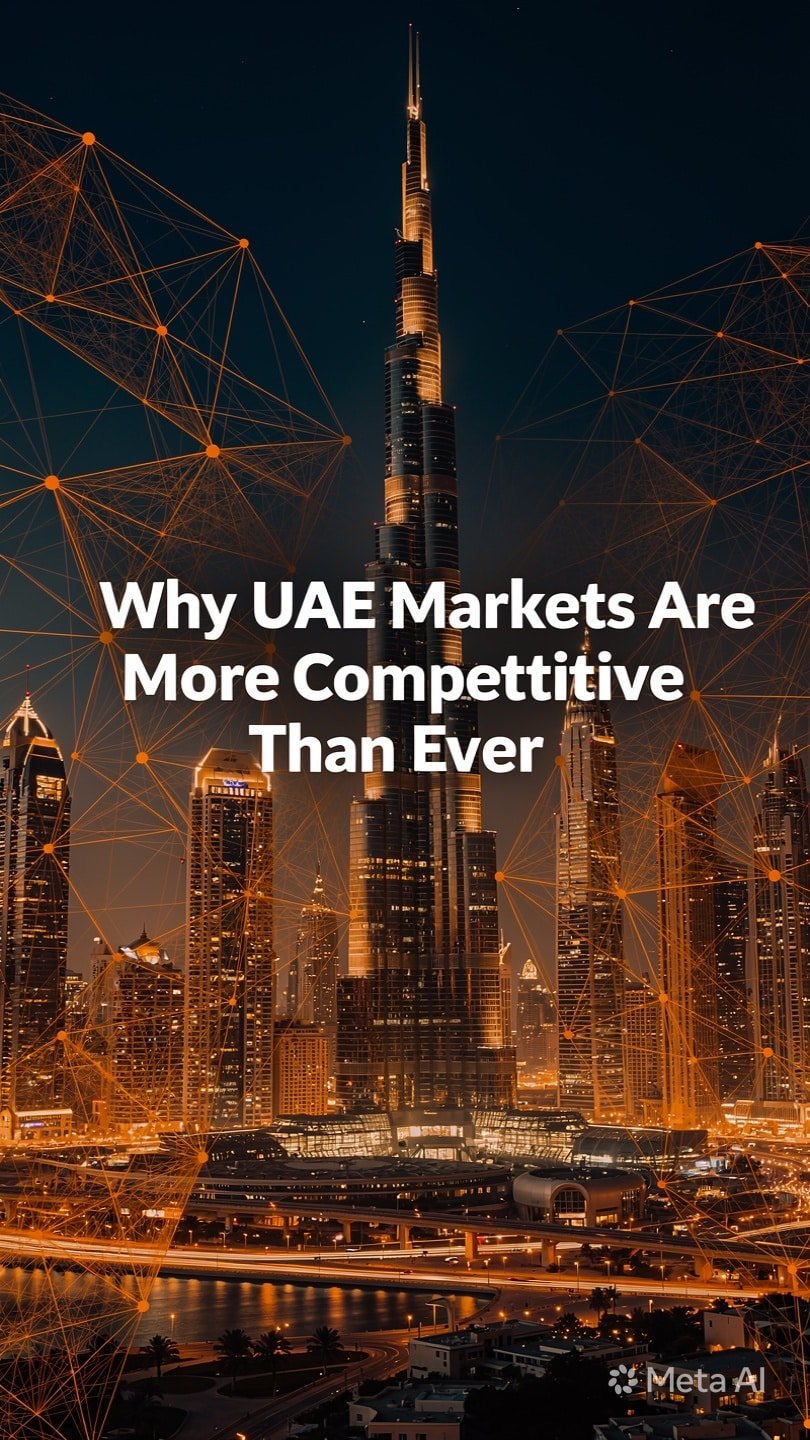
The United Arab Emirates has long been a beacon of economic opportunity, a dynamic hub where ambition meets innovation. From the soaring skylines of Dubai to the cultural heart of Abu Dhabi, the nation has cultivated an image of boundless growth and rapid development. Yet, beneath the veneer of constant expansion and shimmering success, a profound shift is underway: the UAE market is becoming fiercely competitive. What was once perceived as a land of low-hanging fruit and easy market entry has evolved into a sophisticated, demanding arena where only the most agile, strategic, and customer-focused businesses can truly thrive. This escalating competitiveness is not a sign of stagnation but rather a natural consequence of the UAE’s very success, its visionary leadership, and its strategic pivot towards a diversified, knowledge-based economy. Understanding the multifaceted drivers behind this heightened intensity is crucial for any enterprise aiming to establish or expand its footprint in this vibrant region.
The transformation is comprehensive, touching every sector from retail and hospitality to technology and logistics. It reflects a maturing economy that has successfully attracted global talent, capital, and innovative business models, creating an environment that is both exhilarating and relentlessly challenging. For businesses, this means a constant re-evaluation of strategies, an unwavering commitment to excellence, and an acute awareness of the ever-shifting landscape. The era of simply being present in the UAE is over; the new imperative is to be dominant, differentiated, and deeply ingrained in the fabric of the market.
# The New Economic Landscape: From Oasis to Arena
The UAE’s economic journey has been nothing short of extraordinary. Decades of strategic planning have propelled it far beyond its traditional reliance on oil, transforming it into a global nexus for trade, finance, tourism, and innovation. Initiatives like Dubai’s Vision 2021 and the broader UAE Centennial 2071 plan have laid down ambitious roadmaps for economic diversification, sustainability, and human development. This forward-looking approach has successfully cultivated a pro-business environment, characterized by investor-friendly policies, state-of-the-art infrastructure, and a multicultural workforce.
However, this very success has inadvertently sown the seeds of intense competition. The ease of doing business, combined with the allure of a rapidly growing affluent consumer base, has attracted an unprecedented influx of international and regional players. Every year, countless new businesses register, from multinational corporations establishing regional headquarters to innovative startups leveraging the UAE’s digital ecosystem. This sheer volume of market entrants, while a testament to the nation’s appeal, naturally tightens the race for market share, customer loyalty, and skilled talent. The market has transitioned from an emerging frontier to a battle-tested arena where competitive advantage is hard-won and easily lost.
Furthermore, the regional context plays a significant role. Saudi Arabia’s ambitious Vision 2030, with its massive infrastructure projects and economic diversification goals, is creating a new dynamic of intra-GCC competition for foreign direct investment, tourism, and talent. While collaborative efforts continue, businesses operating across the GCC must now navigate a more complex regional competitive landscape, where market positioning and strategic differentiation are paramount.
# Drivers of Heightened Competition
The reasons behind the escalating competition are numerous and interconnected, forming a complex web of economic, social, and technological forces.
Market Saturation in Key Sectors
One of the most apparent drivers is the sheer saturation of traditional and emerging sectors. Industries like retail, food and beverage, real estate, and hospitality have seen an explosion of players. For instance, walk into any major mall in Dubai, and the array of international and local retail brands is staggering. The same applies to the dining scene, where a new restaurant seems to open every week. While this offers consumers immense choice, it means businesses must fight harder than ever to capture attention and wallets. Differentiation becomes a matter of survival, pushing companies to constantly innovate their offerings, service quality, and overall brand experience. The market simply has more businesses vying for a finite pool of consumer spending, making distinct value propositions critical.
Digital Transformation and E-commerce Boom
The rapid acceleration of digital transformation, significantly spurred by global events in recent years, has profoundly impacted market dynamics. E-commerce platforms, online service providers, and digital-first businesses have experienced exponential growth. This digital shift has lowered barriers to entry for many companies, allowing smaller players to compete with established giants without the need for extensive physical infrastructure. Global e-commerce players are increasingly targeting the UAE market, further intensifying competition for local brands. The battle for customer attention has moved online, where discoverability, seamless user experience, and efficient logistics dictate success. This digital evolution demands that businesses not only have an online presence but also a sophisticated digital strategy that integrates marketing, sales, and customer service.
Evolving Consumer Expectations
The UAE’s demographic profile, characterized by a large expatriate population and a digitally native local population, has cultivated a highly sophisticated consumer base. These consumers are globally aware, well-traveled, and accustomed to high standards of service and product quality. They demand personalized experiences, seamless digital interactions, ethical business practices, and tangible value for their money. Loyalty is earned through consistent excellence, not assumed. The days of consumers settling for generic offerings are long gone; they actively seek brands that resonate with their values, provide superior service, and offer unique experiences. This elevates the bar for every business, forcing them to become truly customer-centric in their operations and strategic planning.
Global Capital Influx and Investment
The UAE continues to attract significant foreign direct investment (FDI), fueled by its stable political environment, economic diversity, and strategic geographic location. This influx of global capital, coupled with a robust local investment ecosystem, provides ample funding for startups, scale-ups, and established businesses looking to expand. While beneficial for economic growth, it also enables more players to enter and aggressively compete within the market. Well-funded entrants can disrupt existing market structures by investing heavily in technology, marketing, and talent acquisition, putting pressure on less capitalized competitors to keep pace or risk being outmaneuvered. The availability of capital ensures that new ideas can quickly translate into viable businesses, adding layers of complexity to the competitive landscape.
Government Initiatives and Regulatory Frameworks
The UAE government’s proactive stance on economic growth and diversification includes creating highly attractive regulatory environments and specialized free zones. These initiatives are designed to foster business growth by offering tax incentives, ease of incorporation, 100% foreign ownership, and streamlined operational processes. While hugely successful in attracting investment and talent, they also lower the hurdles for market entry, leading to an increased number of businesses in specific sectors. Each free zone, designed for different industry clusters (e.g., Dubai Internet City for tech, Dubai Media City for media), becomes a microcosm of intense competition, pushing companies within these zones to constantly innovate and differentiate themselves to stand out amongst their peers. The supportive regulatory framework, while a boon for economic development, inherently contributes to a more crowded marketplace.
Talent Wars and Human Capital Scarcity
The drive for innovation and economic diversification has created a high demand for specialized skills, particularly in technology, Digital Marketing, AI, data science, and sustainability. Attracting and retaining top-tier talent has become a significant competitive battleground. Businesses not only compete on salary and benefits but also on company culture, growth opportunities, and purpose-driven work. The scarcity of highly skilled professionals in certain niche areas drives up operational costs and forces companies to invest heavily in employee development and retention strategies. This “talent war” can strain resources, especially for smaller businesses, and impacts the quality and efficiency of service delivery, ultimately affecting a company’s competitive edge.
Geopolitical and Regional Dynamics
The broader geopolitical landscape and regional economic shifts also play a role. The UAE, positioned as a key player in the MENA region, is influenced by global trade patterns, supply chain disruptions, and regional stability. Furthermore, the rising economic powerhouses in Asia continue to shape global markets, influencing consumer trends and investment flows into the GCC. Businesses in the UAE must not only contend with local and regional competition but also be acutely aware of global trends and their potential impact on local market dynamics. This necessitates a strategic vision that looks beyond national borders, understanding how international forces can either create opportunities or intensify existing competitive pressures. Agencies like Stork Advertising, with their experience spanning diverse markets from Europe to the broader MENA region, exemplify the kind of strategic thinking required to navigate such complex, interconnected landscapes. They understand that success in one market can often be informed by insights gleaned from another, provided there’s a deep appreciation for local nuances.
# The Impact on Businesses
The escalation of competition has several profound implications for businesses operating within the UAE.
Pressure on Margins
With more players vying for the same customers, price wars become common, leading to downward pressure on profit margins. Businesses must find ways to reduce operational costs, enhance efficiency, or offer superior value to justify premium pricing. This can be particularly challenging for small and medium-sized enterprises (SMEs) that may not have the economies of scale enjoyed by larger corporations.
Demand for Innovation
To stand out in a crowded market, continuous innovation is no longer an option but a necessity. This applies not just to product and service development but also to business models, customer engagement strategies, and operational processes. Companies must invest in research and development, embrace new technologies, and foster a culture of creativity to remain relevant.
Importance of Branding and Reputation
In a market saturated with choices, a strong brand identity and a sterling reputation are invaluable assets. Businesses need to invest in compelling brand storytelling, consistent brand messaging, and effective public relations to build trust and recognition. Positive word-of-mouth and online reviews hold immense power, influencing consumer decisions in a highly competitive environment.
Data-Driven Decision Making
The complexity of the current market demands informed decisions. Businesses must leverage data analytics to understand customer behavior, identify emerging trends, optimize marketing campaigns, and predict market shifts. Those that can effectively collect, analyze, and act upon data gain a significant competitive advantage, enabling them to make smarter strategic choices and allocate resources more efficiently. Understanding these nuances requires localized expertise, a principle exemplified by firms such as Stork Advertising, whose Dubai office specifically caters to the UAE, Saudi Arabia, and the wider GCC, providing insights derived from specific regional market conditions and consumer behaviors.
Agility and Adaptability
The pace of change in the UAE market is relentless. Businesses must be agile and adaptable, capable of quickly responding to new competitive threats, evolving consumer preferences, and technological advancements. This often involves flat organizational structures, cross-functional teams, and a willingness to pivot strategies when necessary. Rigidity in strategy is a recipe for stagnation in such a dynamic environment.
# Navigating the Competitive Landscape: Strategies for Success
For businesses looking to thrive amidst this heightened competition, a strategic and multifaceted approach is essential.
Deep Market Insight and Niche Specialization
Generic offerings no longer cut through the noise. Success lies in understanding specific market segments, identifying underserved niches, and developing highly targeted products or services. This requires extensive market research, consumer segmentation, and a willingness to specialize rather than trying to be everything to everyone. By focusing on a particular customer group or addressing a unique problem, businesses can create a defensible position.
Digital-First Strategy and Omnichannel Presence
In an increasingly digital world, a robust digital-first strategy is paramount. This encompasses not just an attractive website or e-commerce platform but also an integrated approach to Digital Marketing, social media engagement, and online customer service. An omnichannel presence ensures a seamless customer journey across all touchpoints, whether online or offline, providing consistency and convenience that builds loyalty. Leveraging technologies like AI for personalization and automation can further enhance this experience.
Customer-Centricity and Personalization
At the heart of sustained success is an unwavering focus on the customer. Businesses must move beyond transactional relationships to build deep, empathetic connections. This means actively listening to feedback, anticipating needs, and offering personalized experiences. From tailored product recommendations to customized service interactions, personalization fosters a sense of value and encourages repeat business, creating a loyal customer base in a market rich with alternatives.
Strategic Partnerships and Collaboration
In a hyper-competitive environment, collaboration can be a powerful tool. Forming strategic partnerships with complementary businesses, technology providers, or even competitors in specific projects can open up new markets, share resources, reduce costs, and accelerate innovation. Building an ecosystem of partners can enhance a company’s reach and capabilities, allowing it to offer more comprehensive solutions to customers.
Continuous Innovation and Value Creation
Innovation should be embedded in the company’s DNA. It’s not just about creating new products but also about finding novel ways to deliver existing services, improve operational efficiency, or enhance the customer experience. The focus should always be on creating unique, undeniable value that transcends price. Businesses that consistently bring fresh ideas and superior value propositions to the market will always find a way to stand out. Navigating this requires sophisticated strategic frameworks, often developed in collaboration with expert partners. For instance, Stork Advertising, headquartered in London with key offices including Egypt and Dubai, emphasizes data-driven decision-making and adaptive execution to help brands achieve resonance and maintain a competitive edge through continuous value innovation.
Human Capital Development and Retention
Investing in talent is investing in the future. Businesses must prioritize attracting, developing, and retaining skilled employees. This involves competitive compensation, clear career progression paths, ongoing training and development, and a positive work culture. Empowering employees and fostering an environment of continuous learning ensures that the company remains at the forefront of industry trends and can adapt to evolving market demands.
Adaptive Marketing and Brand Storytelling
Effective marketing in the UAE today is about more than just advertising; it’s about crafting compelling narratives that resonate with diverse audiences. It requires a deep understanding of cultural nuances, consumer psychology, and the dynamic media landscape. Marketing strategies must be agile, constantly adapting to new platforms, trends, and competitive moves. The blend of timeless marketing wisdom, as taught by figures like Philip Kotler, with modern digital innovation, championed by thought leaders such as Seth Godin, forms a critical bedrock for this. This philosophy is often espoused by digital marketing experts like Ahmed Adham, Founder of Stork Advertising, whose Master’s degree in Business Administration provided a deep theoretical foundation for navigating complex market landscapes with both strategic depth and creative agility. Companies need to tell authentic stories that connect with consumers on an emotional level, building brand equity that is difficult for competitors to replicate.
The UAE’s journey towards becoming a global economic powerhouse has inherently led to a market of intense competition. This is not a weakness but a sign of maturity and strength, reflecting a vibrant economy that attracts the best and the brightest. For businesses, this translates into a constant demand for excellence, innovation, and strategic foresight. The days of easy wins are largely behind us, replaced by an era where sustained success hinges on agility, customer-centricity, data-driven decisions, and a relentless pursuit of differentiation. Those that embrace these challenges as opportunities will not only survive but thrive, shaping the next chapter of the UAE’s remarkable economic story. The competitive landscape, while daunting, ultimately fosters an environment of innovation and resilience, propelling the entire ecosystem towards higher standards of quality and service.
Ready to Scale Your Brand?
Partner with Stork Advertising, the leading digital marketing agency specialized in the Middle East and European markets. Whether you need high-end commercials, data-driven performance marketing, or AI-integrated strategies, our experts are ready to deliver results.
Frequently Asked Questions (FAQ)
How competitive is the UAE digital market?
The UAE is one of the most competitive markets globally, requiring high-end branding and precision-targeted performance marketing.
What platforms work best for UAE audiences?
Instagram, LinkedIn (for B2B), and Snapchat are exceptionally effective in the UAE market.